Menu
Goji Extract: Polysaccharides, Benefits and Bulk Buying
For goji extract buyers, a polysaccharide percentage is only the beginning of the specification. Botanical identity, extraction process, assay method and carrier content determine what you are actually comparing. PHYTONIVA helps small supplement brands, ingredient distributors and formulation teams discuss suitable sourcing options, flexible MOQ and sample orders against a clear purchasing brief.
Goji extract specifications: species, fruit and polysaccharides
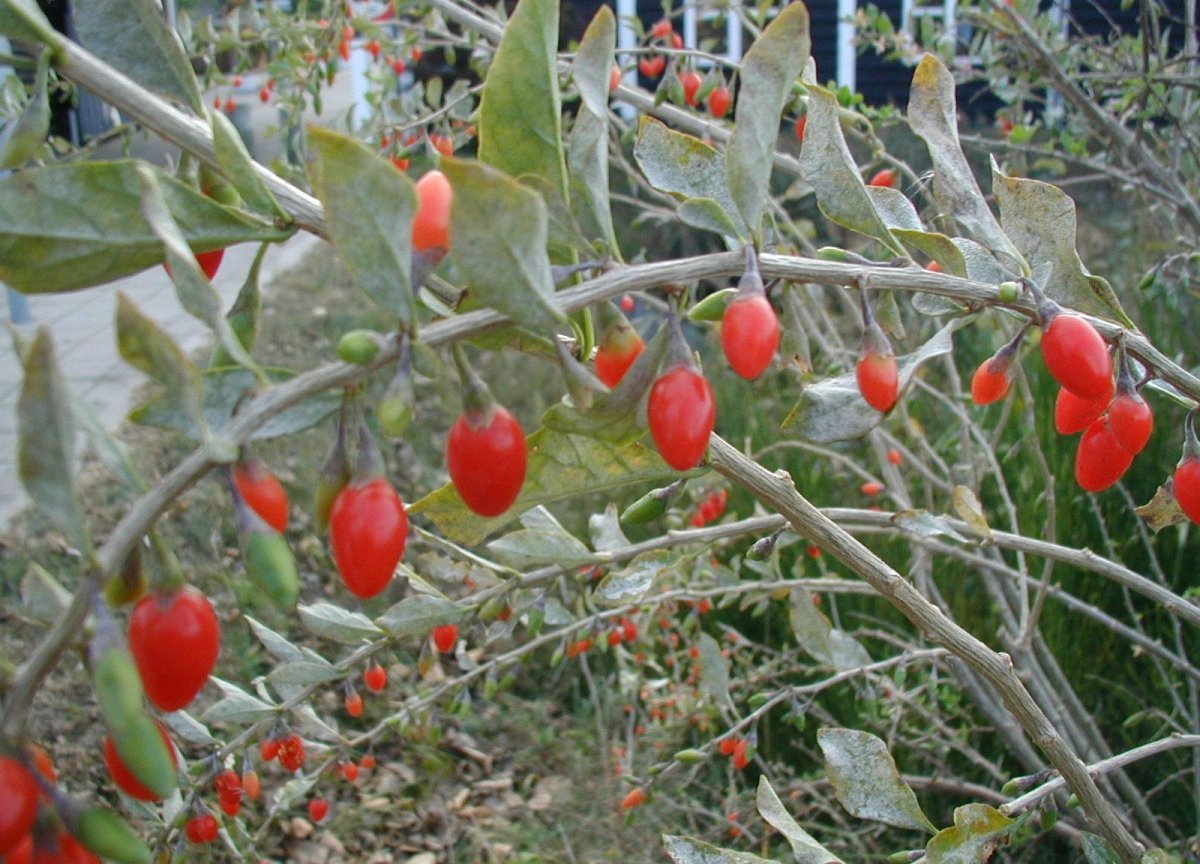
Goji and wolfberry are common names associated with Lycium materials. Put the intended Latin species and plant part in your enquiry; do not treat Lycium barbarum and Lycium chinense, or fruit and leaf materials, as automatic substitutes. An ingredient sold as dried fruit, fruit powder, juice powder or a concentrated extract also needs its own specification.
Our sourcing reference lists goji extract with polysaccharides at 20–50%. This is a catalogue reference for discussion, not a guarantee of current stock or every intermediate grade. The actual species, plant part and source, processing method, composition and available specification must be confirmed before a quotation is finalized.
Specify before comparing: Latin species and plant part; extract or juice-powder form; target polysaccharide result and method; carrier declaration; intended application.
Ask for: a current technical data sheet, sample terms and the document requirements for the selected material and destination. The manufacturer COA and agreed third-party test reports are provided with the shipment.
What does a polysaccharide percentage tell you?
It reports an analytical result under a defined method. It does not by itself establish clinical effectiveness, identify the botanical species or guarantee the same molecular composition as a research preparation. Ask for the sample-preparation procedure, reference standard, calculation and whether the result is reported on the powder as supplied or on a dry basis.
Analytical research comparing 51 batches of L. barbarum fruits used saccharide mapping to characterize their polysaccharides. The procurement lesson is to agree what is being measured, rather than treating an assay number as a complete identity fingerprint. Ask how free sugars and any carbohydrate carriers are handled in the selected test procedure.
If a quotation uses an extraction ratio, compare it separately from a constituent assay. A “10:1” ratio does not establish a polysaccharide percentage. See our extract ratio and standardization guide and carrier-content checklist.
Goji extract benefits: promising research, preparation-specific evidence
Goji research is relevant to formulation discussions, but the material tested matters. Whole-fruit studies, juice studies and studies of isolated polysaccharide preparations cannot be treated as evidence for every commercial extract. A higher catalogue percentage is not proof of a stronger finished-product benefit.
Polysaccharides and metabolic research
A 2015 randomized, double-blind clinical study completed by 67 people with type 2 diabetes reported improvements in some glucose-related measures with the particular L. barbarum polysaccharide preparation tested. It was a small, preparation-specific study; it does not show that an unspecified goji extract treats diabetes or can replace prescribed care.
For procurement, request enough composition and process information to assess whether a proposed ingredient is comparable to the research material. Do not copy a clinical study’s outcomes or dose into a finished-product claim simply because both materials use the term “polysaccharides.”
Whole berries and eye-health research
A 2021 randomized, unmasked pilot trial analyzed 27 healthy middle-aged adults over 90 days. Participants consumed whole goji berries or a lutein-and-zeaxanthin supplement. The berry group showed increases in macular pigment optical density at some measured retinal locations compared with its baseline. The study was small and measured a biomarker; it did not establish that a polysaccharide-standardized extract prevents eye disease.
This distinction matters when selecting an ingredient: a polysaccharide specification does not guarantee a zeaxanthin content, and an extract is not nutritionally identical to the whole fruit. If your brief requires carotenoids, define a separate marker specification and ask for relevant analytical documentation.
How to use the research responsibly
Use research to choose evaluation questions, not to promise treatment outcomes. Laboratory antioxidant or cell-response results do not establish benefits in people. Have the actual ingredient, intended use, finished formulation and proposed claims reviewed together. The studies above do not establish suitability for every population, formulation or destination.
Choose the right form for your formulation
Tell us whether you need a standardized extract for a measured marker, a fruit powder for a food concept or a juice-powder ingredient for a beverage prototype. These are different procurement briefs. For the selected grade, request full composition and evaluate colour, taste, odour, dispersibility, sediment and stability under your intended processing conditions.
- Capsules or dry blends: assess particle size, powder flow, moisture and compatibility with other ingredients.
- Beverage prototypes: test the actual sample at your planned concentration, pH and process temperature; do not infer clarity or complete solubility from the product name.
- Other applications: describe the intended use and required documentation before choosing a grade. One ingredient specification is not a blanket clearance for every use.
Agree contaminant and microbiological limits, relevant pesticide and residual-solvent requirements, and storage and packaging conditions with your quality team. Request documents for the actual selected material. Certification should match the manufacturing site and product scope; it is not automatically shared by every goji grade. Our quality and documentation page explains the sourcing information to request.
Flexible MOQ and sample orders for goji extract
Sample-order enquiries are welcome, including from buyers who are still finalizing a specification. MOQ is discussed according to the selected grade, packaging, production arrangements and supply conditions. Sample charges, freight, available quantities and timing are confirmed individually; samples are not automatically free.
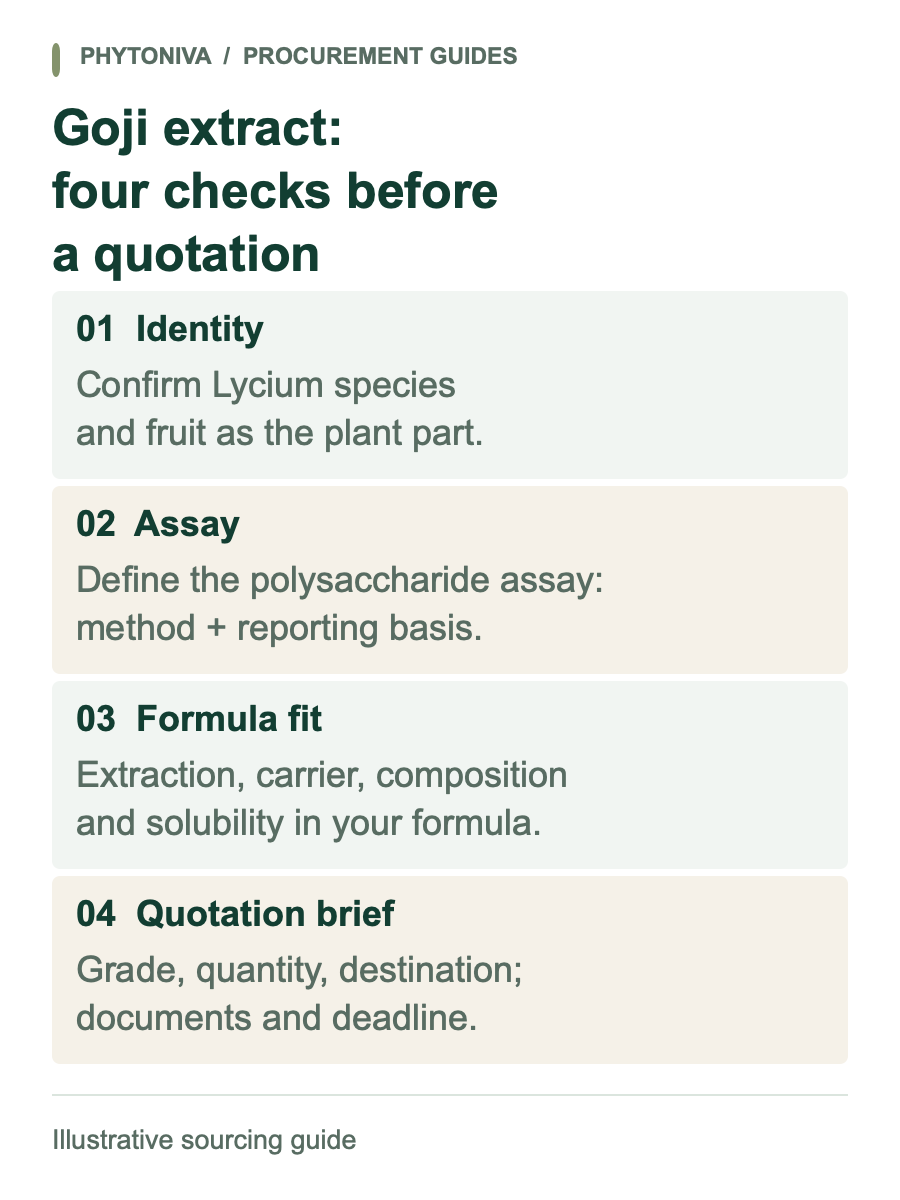
Goji extract: four checks before a quotation
Identity
Confirm the Lycium species and fruit as the plant part. A common name alone does not define the offered botanical material.
Polysaccharide assay
Define the polysaccharide specification, analytical method and reporting basis for the offered grade. Request supporting specification and batch data, and compare results on the same basis. A supplier catalogue range is a sourcing reference, not a guaranteed supply range.
Formula fit
Confirm the extraction details, carrier and complete composition, together with solubility under the intended formulation conditions. Check the selected grade in your own application.
Quotation brief
Specify the grade, quantity, destination, required documents and deadline. State the intended use so the quotation can match the material and supply conditions to your project.
For a US project, identify the intended finished-product use and the documents your quality or regulatory team requires. For an African destination, name the specific country and intended use. We assess the sourcing brief individually; we do not assume that all countries have the same requirements.
Send your evaluation quantity and expected commercial quantity separately. Explain what the sample should help you decide, such as assay verification, taste, dispersion or compatibility with a blend. This makes a small trial more useful and helps compare quotations on the same basis.
Frequently asked questions
Is goji extract the same as goji juice powder?
No automatic equivalence should be assumed. Confirm the starting material, manufacturing process, composition, carrier and assay. A name or powder colour alone does not establish which form you are buying.
Is a 50% polysaccharide grade necessarily better than a 20% grade?
Not necessarily. Compare methods and reporting bases first, then assess suitability, composition and sample performance for the application. A higher assay alone does not prove greater clinical benefit.
Can I request samples before choosing a final order size?
Yes. Include your intended use, candidate specification, evaluation quantity, destination and deadline. We can discuss suitable sourcing options and the applicable sample and MOQ conditions.
Does a polysaccharide specification include a zeaxanthin guarantee?
No. These are different specifications. State a zeaxanthin requirement separately and request a matching method and result if it is part of your purchasing brief.
Request a goji extract quotation
Review our goji-extract catalogue reference, or send a sourcing enquiry. Include specification, application, sample or order quantity, destination country, required documents and timing. Email sales@phytoniva.com or contact PHYTONIVA on WhatsApp. We help buyers compare appropriate manufacturing-partner options for the requirement.
Sourcing coordination and quality checks
PHYTONIVA manages trade, sourcing and supplier coordination, matching ingredients and supply options to your specification, application and destination. The manufacturing partner provides its COA and relevant quality documents. Before procurement and dispatch, we arrange independent third-party quality testing and obtain the report for the agreed testing scope.
Specifications, sampling, test scope, methods and acceptance criteria are agreed before ordering. The manufacturer COA and agreed third-party test report accompany the shipment. Certification is checked separately for the named holder, product and valid scope.
See our quality and documentation process