Menu
Ginger Extract: Gingerols, Benefits Research and Uses
Ginger extract brings a familiar botanical into a more defined ingredient format. Made from Zingiber officinale, it is of interest for its gingerols, characteristic pungency and research on nausea, digestive motility and exercise-related muscle soreness. For formulators, the practical question is which preparation and constituent profile best fit the intended product.
This guide explains what ginger extract contains, what human studies actually observed and how to compare sourcing options. PHYTONIVA works with small brands, distributors and development teams. Sample orders are welcome, and MOQ can be discussed according to specification, packaging and supply conditions.
Compare sourcing specificationsDiscuss a sample or bulk order
What is ginger extract?
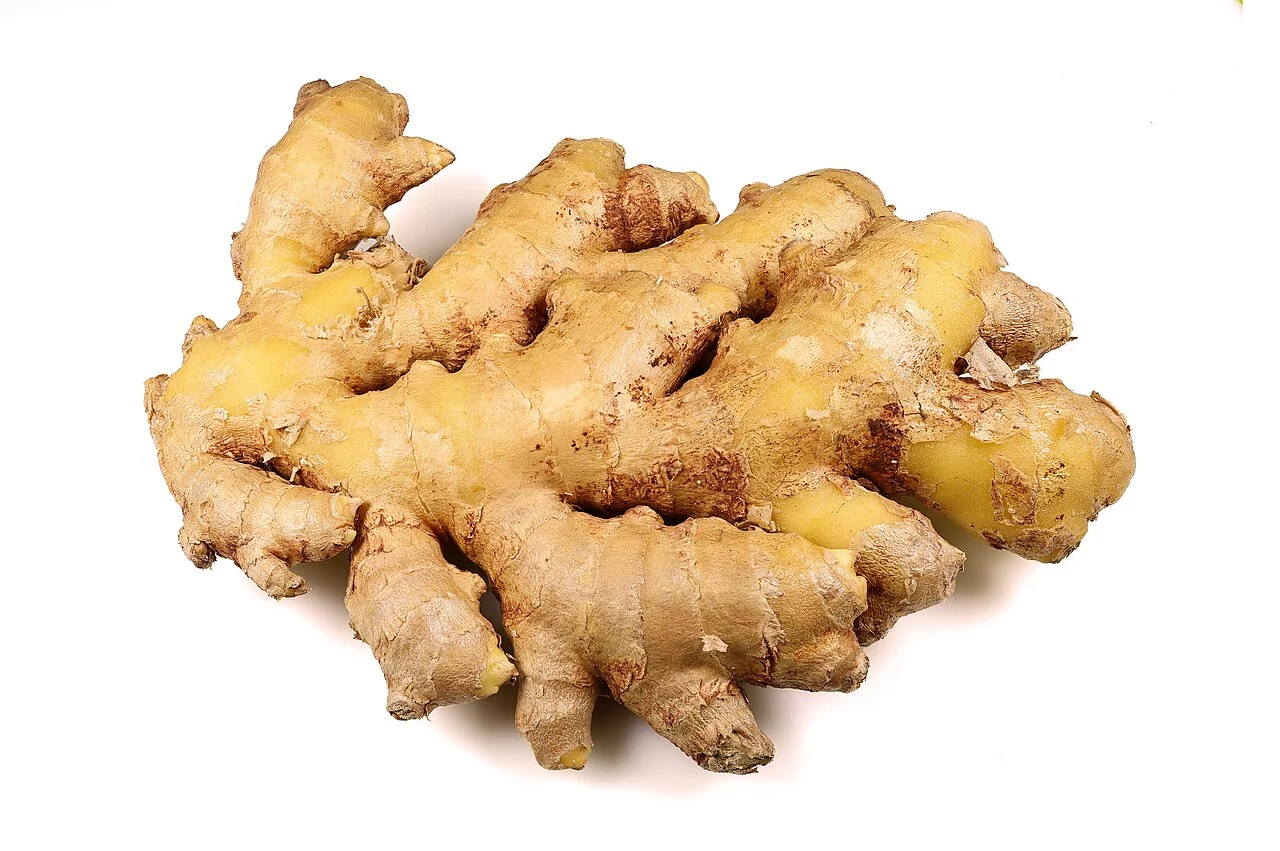
Ginger is Zingiber officinale. The part commonly called “ginger root” is botanically a rhizome, an underground stem. It is used in foods and herbal preparations, as described by NCCIH. Fresh rhizome, dried ginger powder and an extract represent different ingredient forms.
Grinding produces a powder of the plant material; extraction uses a process and solvent to obtain a selected portion of its constituents. An extract specification can define a measured marker level, but “ginger extract” alone does not describe its full composition. Confirm the botanical identity, rhizome starting material, extraction process and any carrier for the proposed grade.
Gingerols and shogaols: why the profile matters
Gingerols include individually measurable compounds such as 6-gingerol, 8-gingerol and 10-gingerol. Shogaols are related compounds, including 6-shogaol. An original analytical study measured these four markers separately in supplements, spices, teas and beverages and found substantial variation between products.
Processing also changes the profile. In a study comparing ginger-drying methods, some high-temperature treatments lowered measured gingerols while increasing shogaols. That is a useful manufacturing observation, not evidence that heating automatically produces a clinically better ingredient.
For procurement, specify whether “gingerol” means one named compound or a defined sum of compounds. Clarify whether shogaols are measured separately, which analytical method is used and whether the result is reported on a dry basis or for the material as supplied. This makes two quotations meaningfully comparable.
Ginger benefits research: three human findings
Digestive motility: faster gastric emptying in a small study
In a randomized, double-blind crossover study, 11 people with functional dyspepsia took 1.2 g of ginger powder or placebo before a low-nutrient soup meal. Median gastric half-emptying time was 12.3 minutes with ginger versus 16.1 minutes with placebo.
This offers a concrete reason for research interest in digestive motility. However, gastrointestinal symptom scores did not improve in that experiment. It was a small, short-term test using ginger powder, so faster emptying should not be presented as proven relief of indigestion from an arbitrary extract.
Nausea: a specific preparation studied alongside standard care
A multicentre trial published in 2012 randomized 744 chemotherapy patients; 576 provided evaluable data. A particular liquid ginger extract, formulated in capsules, was used alongside standard anti-nausea medication. Treatment lasted six days per studied chemotherapy cycle, beginning three days before chemotherapy. The ginger groups combined had lower nausea severity on the first chemotherapy day than placebo; the largest reductions were associated with 0.5 g and 1 g daily ginger-root equivalents.
Those quantities describe the study’s root-equivalent dosing, not grams of any commercial extract. NCCIH still considers ginger’s overall usefulness for chemotherapy-related nausea uncertain. The trial is a preparation-specific finding, not a replacement for prescribed care or a claim that every form of nausea responds to ginger.
Exercise-related soreness: a repeated-use finding
Two randomized, placebo-controlled experiments enrolled 34 and 40 volunteers. Participants took 2 g daily of raw or heat-treated ginger, respectively, or placebo for 11 days. After an exercise protocol involving eccentric elbow-flexor contractions, pain at 24 hours was 25% lower with raw ginger and 23% lower with heated ginger than with placebo.
The result supports further investigation of ginger for exercise-related soreness. Heating did not improve the effect in these experiments. This does not establish injury healing, improved athletic performance or an equivalent effect from a gingerol-standardized extract at a different intake.
The studies above used different preparations and schedules. Their doses are reported to explain the evidence, not to recommend a finished-product dose.
Practical uses in product development
Ginger offers several development directions, with the choice of grade guided by the finished format:
- Capsules and tablets: compare the desired constituent profile with carrier content, bulk density and flow. Digestive or active-lifestyle concepts need an evidence review for the actual ingredient and proposed claims.
- Powder blends and sachets: evaluate pungency, colour, mixing uniformity and moisture behaviour in the complete formula. A sample can show whether ginger’s sensory character works with the other ingredients.
- Beverages and liquid formats: check dispersion, sedimentation, flavour and stability at the intended pH and processing temperature. A gingerol percentage does not guarantee a clear, water-soluble drink.
- Food and flavour applications: decide whether the priority is ginger character, a measured marker level or both. A culinary ginger powder and a standardized extract may answer different briefs.
These are formulation options to evaluate. Tell us the destination country and product category so that sourcing and document requirements can be considered for the specific project.
Safety considerations for the intended users
NCCIH lists possible oral side effects including abdominal discomfort, heartburn, diarrhoea and mouth or throat irritation. People taking medicines should discuss ginger use with their healthcare provider. Pregnancy use also warrants professional advice, and breastfeeding safety is not well established. Evaluate the proposed preparation, intake and target population when developing a finished product.
Choosing a ginger extract grade
The ginger extract catalogue entry is a starting point for a sourcing discussion. One of our catalogue references lists Gingerol 1–5%. This range is a reference to clarify for the proposed supply, not a promise of every intermediate concentration or current stock.
Before comparing offers, confirm the exact analyte or defined total, assay method, reporting basis, extraction solvent and carrier. Also agree the identity and quality checks relevant to the application. The term “Gingerol” alone should not be taken as a guarantee of either 6-gingerol or total gingerols.
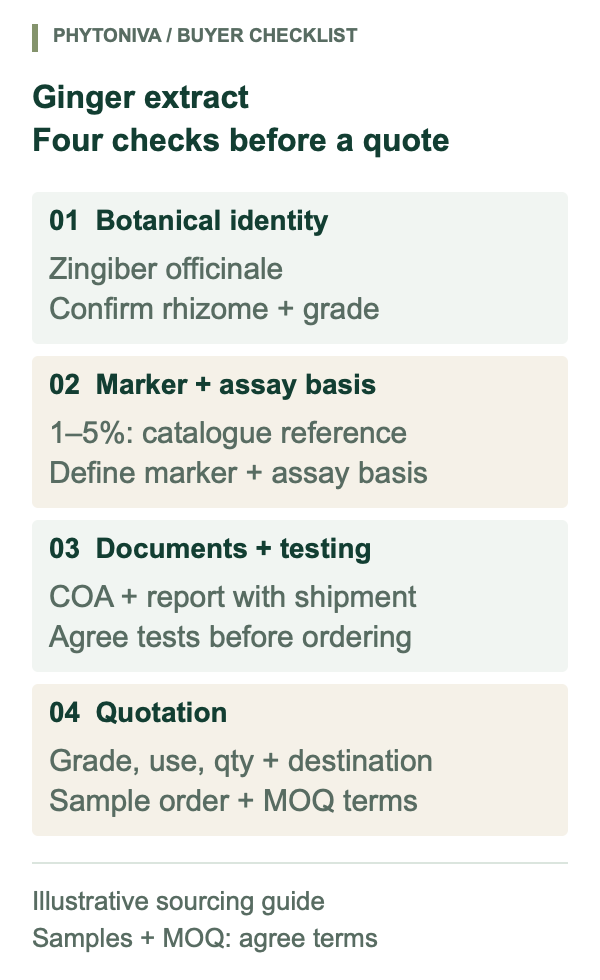
Ginger extract: four checks before a quote
Botanical identity
Confirm Zingiber officinale and the rhizome plant part in the offered specification, together with the extract grade and any carrier.
Marker + assay basis
The catalogue lists gingerol 1–5% as a sourcing reference. Confirm whether the marker is 6-gingerol or total gingerols, the assay method, and whether results are reported on a dry basis or for the as-supplied extract. Confirm the offered grade and availability with your quotation.
Documents + testing
Agree the sample or batch, test scope, methods and acceptance criteria before ordering. PHYTONIVA commissions independent third-party testing before procurement and dispatch; the factory COA and agreed third-party test report accompany the shipment.
Quotation
Send the specification, intended use, quantity, destination, required documents and timing. Sample orders are welcome; MOQ, sample costs, packing and timing are agreed for the requested grade and supply conditions.
PHYTONIVA coordinates trade, sourcing and suppliers, and arranges independent third-party quality testing before procurement and dispatch. The manufacturer’s COA and agreed third-party test report accompany the shipment. Specifications, sampling, test scope, methods and acceptance criteria are agreed before ordering. See our quality and documentation process.
Ginger extract FAQ
Is ginger extract the same as ginger powder?
No. Powdered rhizome and an extracted ingredient have different processing histories and potentially different constituent profiles. Specify the required form before comparing marker levels, research or prices.
Does a higher gingerol percentage mean a better product?
It means a higher result for the defined assay, assuming the method and reporting basis are comparable. Suitability also depends on the profile, sensory properties, format, safety and evidence for the intended use.
Can I start with a sample order?
Yes. Sample-order enquiries are welcome for formulation, sensory or analytical evaluation. Tell us the required quantity and purpose; sample charges, freight, timing and subsequent MOQ are agreed for the proposed order.
Discuss your ginger extract project
Send your target specification, intended use, quantity, destination, required shipment documents and timing through our B2B enquiry form, email sales@phytoniva.com, or WhatsApp +86 19991898850. A clear brief helps us match suitable products, manufacturers and supply arrangements to your project.
Sourcing coordination and quality checks
PHYTONIVA manages trade, sourcing and supplier coordination, matching ingredients and supply options to your specification, application and destination. The manufacturing partner provides its COA and relevant quality documents. Before procurement and dispatch, we arrange independent third-party quality testing and obtain the report for the agreed testing scope.
Specifications, sampling, test scope, methods and acceptance criteria are agreed before ordering. The manufacturer COA and agreed third-party test report accompany the shipment. Certification is checked separately for the named holder, product and valid scope.
See our quality and documentation process