Menu
Reishi Mushroom Extract: Benefits, Features and Uses
Reishi mushroom extract brings together two useful areas of ingredient development: mushroom polysaccharides and the distinctive triterpenoid chemistry of Ganoderma. Buyers exploring mushroom capsules, powder blends or beverage concepts can compare the source material, measured constituents and sensory performance to find a suitable starting point. Research into fatigue, gut microbiota and metabolic responses helps explain the interest in reishi, although the findings depend on the preparation and study population.
PHYTONIVA helps small brands, ingredient distributors and formulation teams match products and supply options to their specification, application, budget and destination. Sample orders are welcome, and MOQ can be discussed according to the grade, packaging and supply conditions.
What is reishi mushroom extract?
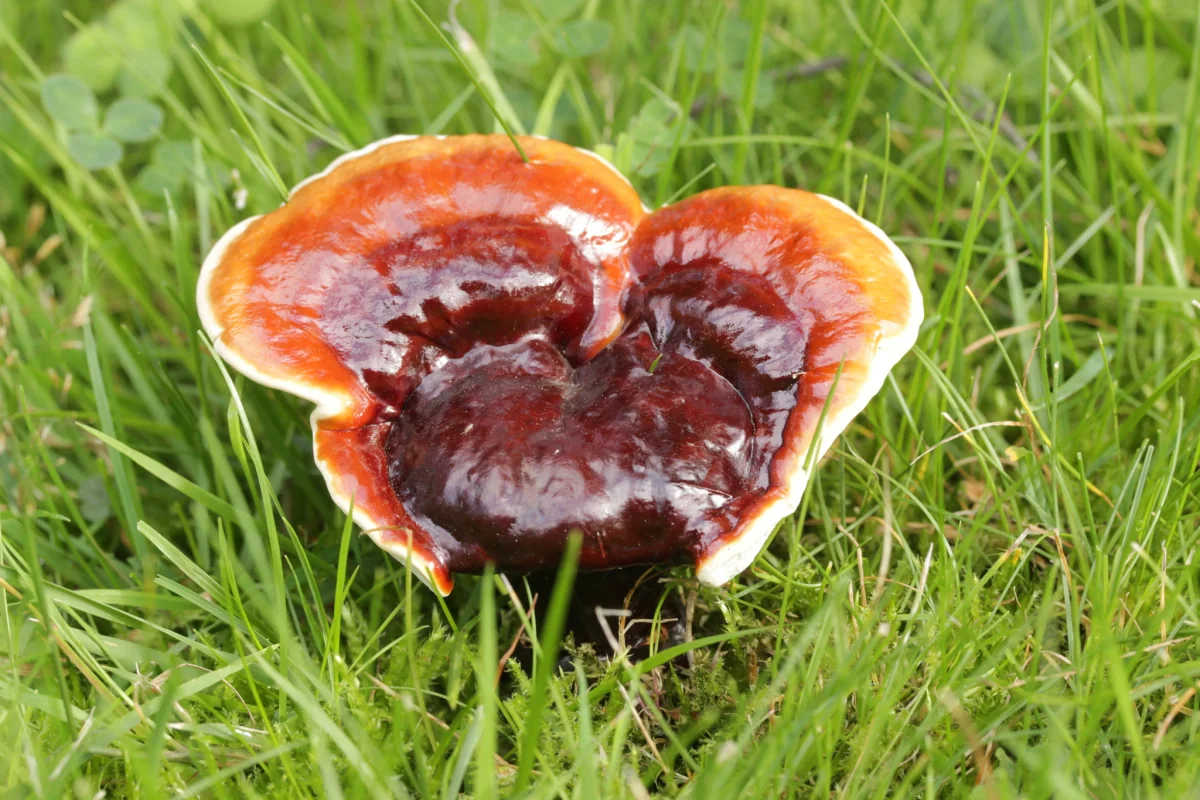
Reishi, also called lingzhi, is a common name used for fungi in the genus Ganoderma. An extract is a processed preparation of selected soluble or recoverable constituents; it is different from simply milling the raw mushroom into a whole powder. The starting material and extraction process shape what ends up in the finished ingredient.
The familiar name Ganoderma lucidum has historically been applied broadly. Molecular research distinguishes it from G. lingzhi, a name widely associated with East Asian cultivated reishi. A DNA-based study of commercial reishi products found that common labeling did not reliably identify the actual species. For a proposed supply, ask for its stated scientific identity and identification basis; do not assume a common name resolves the species.
- Fruiting body: the visible mushroom structure, distinct from the material used to grow it.
- Mycelium: the growing network of fungal filaments. Clarify whether the ingredient is separated fungal biomass or includes cultivation substrate.
- Spores: reproductive material, supplied in forms such as spore powder or further processed extracts. Spore products are not interchangeable with fruiting-body extracts.
These distinctions help explain why two products both labeled “reishi” can behave differently. They also matter when comparing an ingredient with a research preparation.
Polysaccharides, beta-glucans and triterpenes: what is the difference?
Polysaccharides are a broad group of carbohydrate polymers. Beta-glucans are a more specific group of glucose polymers with beta linkages. A total-polysaccharide result cannot be relabeled as the same percentage of beta-glucans. Other carbohydrates, including starch or added carriers, may influence some broad carbohydrate assays, depending on sample preparation and method.
A primary analytical study developed separate measurements of total glucan and alpha-glucan to calculate beta-glucan, and found that hydrolysis conditions affected measured values in materials including reishi. This is why the method and reporting basis belong alongside the percentage when comparing products. Original mushroom beta-glucan measurement study.
Triterpenes, including ganoderic acids, are a separate chemical family. They are not measured by a polysaccharide assay. Research comparing commercial reishi products assessed both triterpene profiles and polysaccharide composition, illustrating the value of looking beyond a single headline number. Original compositional analysis.
For development, the practical question is which constituents your project needs to characterize. A polysaccharide-focused specification, a beta-glucan requirement and a triterpene-focused extract are different briefs. Extraction ratio, assay percentage and clinical effect are also different measures.
What benefits are researchers investigating?
Fatigue and well-being: a preparation-specific human finding
A randomized, double-blind trial enrolled 132 people diagnosed with neurasthenia and compared a proprietary reishi polysaccharide extract, Ganopoly, with placebo for eight weeks. Among 123 assessable participants, fatigue scores fell by 28.3% from baseline in the extract group and 20.1% with placebo; the authors also reported improved overall symptom ratings. This provides a clinical signal worth investigating for fatigue-related development, but it concerns one preparation and a defined patient group, not proof that any reishi powder improves everyday energy or sleep. Original clinical trial.
Gut microbiota and inflammation: findings in mice
In a high-fat-diet mouse study, a water extract of reishi mycelium reduced body weight, inflammation and insulin resistance while changing gut microbial composition. A high-molecular-weight polysaccharide fraction also showed activity. This suggests a useful research direction linking fungal carbohydrates, intestinal microbes and metabolic responses; it is animal evidence from mycelium, not a demonstrated human weight-loss benefit or a result that can be transferred directly to a fruiting-body extract. Original mouse study.
Human metabolic outcomes: an important neutral trial
A 16-week randomized trial enrolled 84 adults with type 2 diabetes and metabolic syndrome. It compared reishi, reishi with Cordyceps sinensis, and placebo. The pooled active-treatment analysis did not improve HbA1c, fasting glucose or the other measured cardiovascular risk outcomes. The result does not support describing ordinary reishi extract as a blood-sugar treatment. It also shows why promising mechanisms and animal findings need confirmation in relevant human studies. Original metabolic-health trial.
The studies above retain the fungal names used by their authors. A commercial ingredient should be compared with the actual source, material, extraction and composition studied, rather than the word “reishi” alone.
How can buyers evaluate reishi in a formulation?
- Capsules and tablets: compare constituent assays, particle size, flow, moisture and blend uniformity. Consider whether the available fill volume can accommodate the planned formulation.
- Mushroom powder blends and sachets: evaluate taste, color and mixing behavior in the complete blend. Test the actual carrier composition and ingredient level rather than relying on the appearance of the dry powder.
- Beverage concepts: assess bitterness, dispersibility, sedimentation and stability at the intended concentration, pH and processing temperature. An extract specification does not by itself establish that a material dissolves clearly or suits a finished drink.
These are development checks, not verified performance claims for a particular supply. Small brands can begin with a focused sample evaluation: define the format and sensory target, compare candidate materials under the same conditions, and decide which measured characteristics matter most. Check the suitability of the ingredient, intended use and finished-product claims for the destination market.
Comparing a 20–50% polysaccharide reference range
One of our supplier reference catalogues lists reishi mushroom extract with 20–50% polysaccharides. This is a catalogue reference range, not a statement that every grade is available. It does not specify 20–50% beta-glucan, a triterpene content or a guaranteed health effect.
Confirm the offered scientific identity, source material, extraction process, carriers, assay method and reporting basis. If beta-glucan or triterpenes are central to your project, state those requirements separately. Agree the relevant identity, contaminant, microbial and residual-solvent requirements for the actual order and intended application.
View the reishi extract catalogue entry.
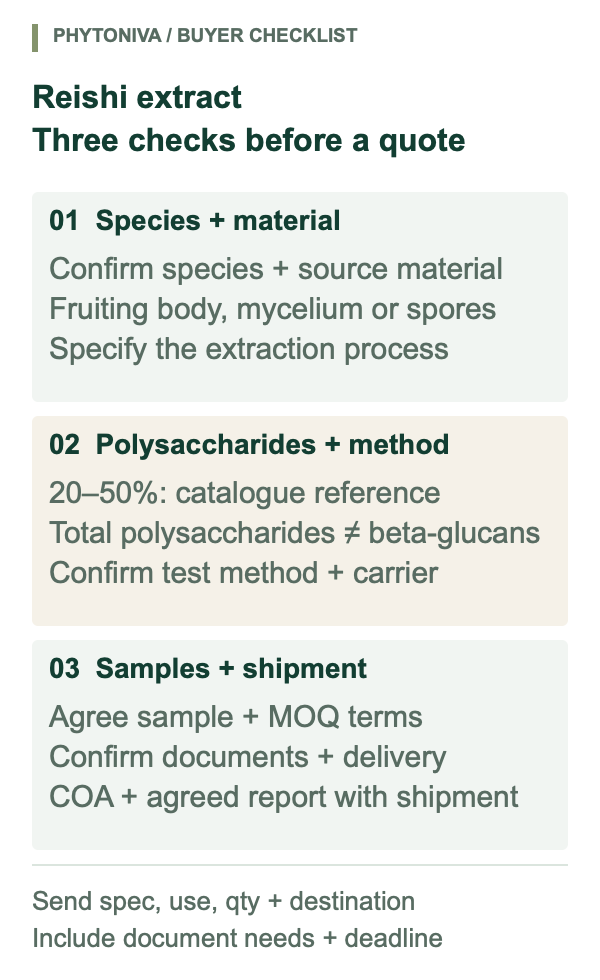
Reishi extract: three checks before a quote
Species + material
Confirm the offered Ganoderma species, whether the starting material is fruiting body, mycelium or spores, and the extract form and extraction process. Do not treat these materials as interchangeable; the catalogue does not establish the species or part of a proposed supply.
Polysaccharides + method
The catalogue lists total polysaccharides at 20–50% as a reference range, not a stock guarantee. Total polysaccharides are not the same measurement as beta-glucans. Confirm the offered assay, reporting basis, analytical method and any carrier; request a separately defined beta-glucan specification if that is the buying target.
Samples + shipment
Sample orders are welcome. MOQ, sample costs, packaging and supply conditions are agreed for the project. State the specification, intended use, quantity, destination, document requirements and deadline. Manufacturer COA and the agreed third-party test report accompany shipment; no presale COA sample or public COA download is currently offered.
Safety considerations for product development
Reishi is not suitable for every intended user. Reported adverse effects include nausea and digestive complaints, and liver injury has been reported. Potential interactions with anticoagulant or antiplatelet medicines and immunosuppressants require particular attention. Have a qualified professional review the intended population, formulation and labeling; the research summarized here is not dosing advice. Memorial Sloan Kettering safety information.
Frequently asked questions
Does 30% polysaccharides mean 30% beta-glucan?
No. Total polysaccharides and beta-glucan are different specifications. Ask for the required constituent to be measured with an appropriate method; do not convert one result into the other.
Is a fruiting-body extract the same as reishi spore powder?
No. They start from different fungal material and may have different processing and composition. Match the material to your formulation and the evidence you intend to use.
Can I start with a sample or smaller order?
Yes, sample-order enquiries are welcome. Describe what you need to evaluate. Sample quantity, charges, packaging and availability are agreed for the proposed option; MOQ is discussed around the specification and supply conditions.
Who handles quality testing and shipment documents?
PHYTONIVA coordinates trade, procurement and supply resources; the manufacturer provides its COA. We arrange independent third-party quality testing before procurement and dispatch. Before ordering, agree sampling, test scope, methods, acceptance criteria and document delivery conditions. The manufacturer COA and agreed third-party report accompany the shipment; we do not currently provide presale COA samples or public COA downloads. A report covers its stated sample and tests. Certification is checked separately for its holder, product and valid scope. See our quality coordination workflow.
Discuss your reishi mushroom extract requirements
Send the required species and fungal material, constituent specification, intended application, quantity, destination, document needs and timing. Tell us whether you are testing a first formulation or comparing supply options, so we can help select a suitable product and procurement arrangement.
Request a quotation · sales@phytoniva.com · WhatsApp +86 19991898850
Sourcing coordination and quality checks
PHYTONIVA manages trade, sourcing and supplier coordination, matching ingredients and supply options to your specification, application and destination. The manufacturing partner provides its COA and relevant quality documents. Before procurement and dispatch, we arrange independent third-party quality testing and obtain the report for the agreed testing scope.
Specifications, sampling, test scope, methods and acceptance criteria are agreed before ordering. The manufacturer COA and agreed third-party test report accompany the shipment. Certification is checked separately for the named holder, product and valid scope.
See our quality and documentation process