Menu
Green Tea Extract: EGCG vs Catechins vs Polyphenols for Buyers
For a green tea extract quotation, specify polyphenols, catechins and EGCG separately. A total-polyphenol percentage does not establish the EGCG content. Ask for the exact analytical target, method and reporting basis before comparing prices.
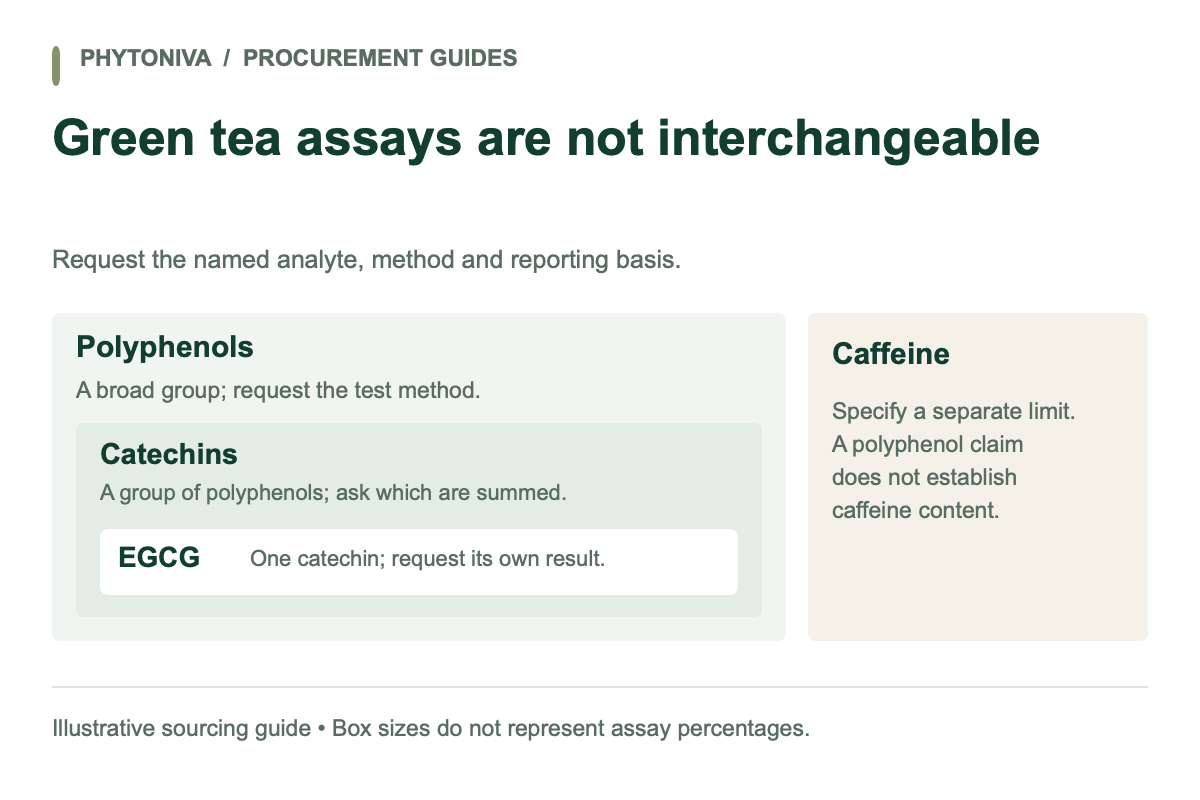
- Polyphenols are a broad group; request the named test method and reporting basis.
- Catechins are a group of tea polyphenols; ask which compounds are included in the reported sum.
- EGCG is one catechin; request its own specification and result when required.
- State a separate caffeine limit if relevant; a polyphenol claim does not establish caffeine content.
- Box sizes do not show composition, purity or assay percentages.
What do the three terms mean?
Polyphenols are a broad group of compounds. Catechins are a group of polyphenols found in tea; epigallocatechin gallate, commonly shortened to EGCG, is one particular catechin. The NIH Office of Dietary Supplements describes green tea catechins, including EGCG. These terms are related, but they are not interchangeable assay specifications.
- Total polyphenols: request the total value and test method. Do not use it as a substitute for an individual-compound result.
- Total catechins: ask which catechins are included in the reported sum.
- EGCG: request its own specification and result when it is part of your purchasing requirement.
- Caffeine: state a separate limit if your formulation requires one. A polyphenol claim does not establish caffeine content.
What PHYTONIVA’s catalog currently lists
Our catalog lists green tea extract with tea polyphenols in the 30%–98% range. This describes catalog specifications, not current stock, an EGCG range or the result for a particular batch. The offered grade, assay method, composition and documents need confirmation in your quotation. See the green tea extract purchasing page.
Why two percentage claims may not be comparable
A quotation is incomplete if it gives a percentage without identifying what was measured. First align the analyte, method and whether the result is stated on a dry basis or on the material as supplied. Then compare carriers, moisture requirements and any additional components. A higher number is not, by itself, proof that a material better fits your formulation.
For example, a quotation for “high polyphenols” and another for “standardized EGCG” describe different acceptance criteria. Ask both suppliers to complete the same specification fields instead of treating the percentages as equivalent. Where a field is not tested, record it as unconfirmed rather than estimating a value from another result.
A practical sample review for a small brand
- Define the intended application and processing conditions with your formulator.
- Request a sample linked to a material code and specification revision.
- Evaluate colour, taste and dispersion in the actual formulation, not just in plain water.
- Review the relevant COA and the tests needed for your market and application.
- Agree how the pilot or commercial order will match the evaluated grade, and what requires re-approval.
Commercial specification review is separate from safety and permitted-use assessment. NCCIH’s green tea reference discusses extract safety and interactions; it does not verify any supplier’s grade or establish a formulation dose. Your finished product still needs an appropriate safety and regulatory review.
What to send with your RFQ
Include: green tea extract; target polyphenols, catechins and/or EGCG; caffeine limit if applicable; preferred test methods; application; trial and repeat-order quantities; destination; sample needs; and required documents. If the specification is still open, say which formulation constraints are fixed and which can be discussed.
Ask for MOQ, sample fees, packing, lead time and the delivery term alongside the material price. For a first purchase, our small-brand first-order guide helps separate sample, pilot and commercial-order decisions.
Can I request a low-caffeine or specific EGCG grade?
You can include those targets in an enquiry. Availability and conformity must be confirmed for the proposed material; the general catalog entry alone does not establish either. PHYTONIVA coordinates sourcing and trade, with documents tied to the selected manufacturer and product.
Request a green tea extract quotation with your specification, quantity and destination.
Sourcing coordination and quality checks
PHYTONIVA manages trade, sourcing and supplier coordination, matching ingredients and supply options to your specification, application and destination. The manufacturing partner provides its COA and relevant quality documents. Before procurement and dispatch, we arrange independent third-party quality testing and obtain the report for the agreed testing scope.
Specifications, sampling, test scope, methods and acceptance criteria are agreed before ordering. The manufacturer COA and agreed third-party test report accompany the shipment. Certification is checked separately for the named holder, product and valid scope.
See our quality and documentation process